Why Reading Anaesthesia Textbooks Won’t Pass the EDAIC Part I — And What to Do Instead
Reading an anaesthesia textbook feels productive. For EDAIC Part I preparation, it is not.
This is not an opinion. It is what the evidence on learning consistently shows: passive reading produces the illusion of knowledge. You recognise information when you see it again. You cannot produce it when the exam asks you to judge whether a statement is true or false.
The EDAIC Part I will not show you information and ask you to recognise it. It will make a claim about physiology, pharmacology, physics, anatomy, or statistics — and ask you to judge it. That is a retrieval task. You prepare for retrieval tasks by practising retrieval. Not by reading.
Here is what to do instead.
What Active Recall Actually Means for EDAIC Part I Preparation
Active recall means retrieving information from memory — not re-reading it from a page.
The difference in practice:
Passive: Read that ketamine increases heart rate. Highlight it. Re-read the paragraph. Move on.
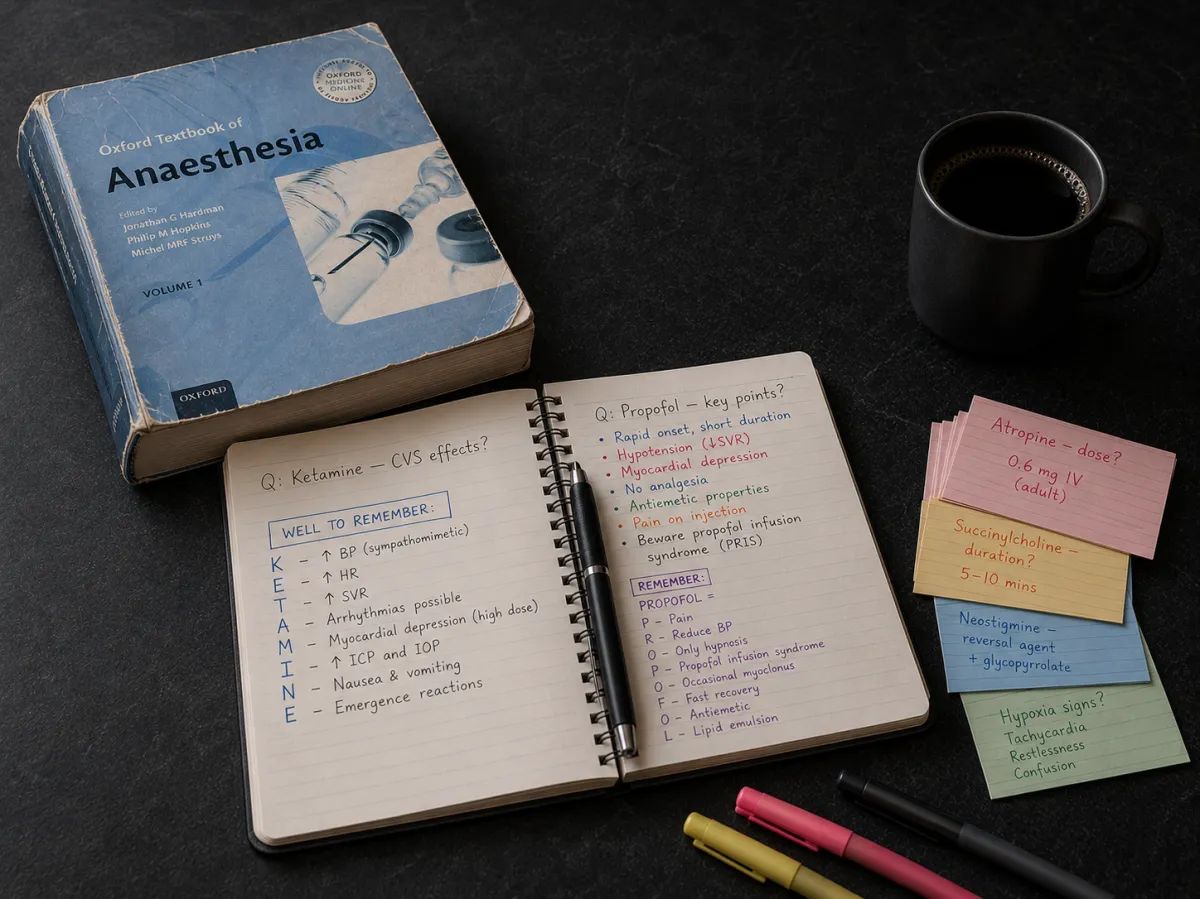
Active: Read the cardiovascular effects of ketamine. Close the book. Write from memory: what does ketamine do to heart rate? Blood pressure? Cardiac output? Myocardial oxygen demand? Check every claim against your source. For each one you got wrong: why was it wrong? What is the correct statement?
The second approach is harder. It feels slower. You will retain it four to five times as well — and in a format that directly maps to how the EDAIC will test you.
How to Apply It Domain by Domain
Take any syllabus subtopic — say, pharmacokinetics of volatile agents.
Passive approach: read two pages on the topic in a textbook.
Active approach:
- Read the topic once, taking brief notes on key claims only
- Close the notes
- Write five true/false statements about volatile agent pharmacokinetics from memory
- Check each one against your source
- For every wrong statement: what was the correct claim? Write it out explicitly.
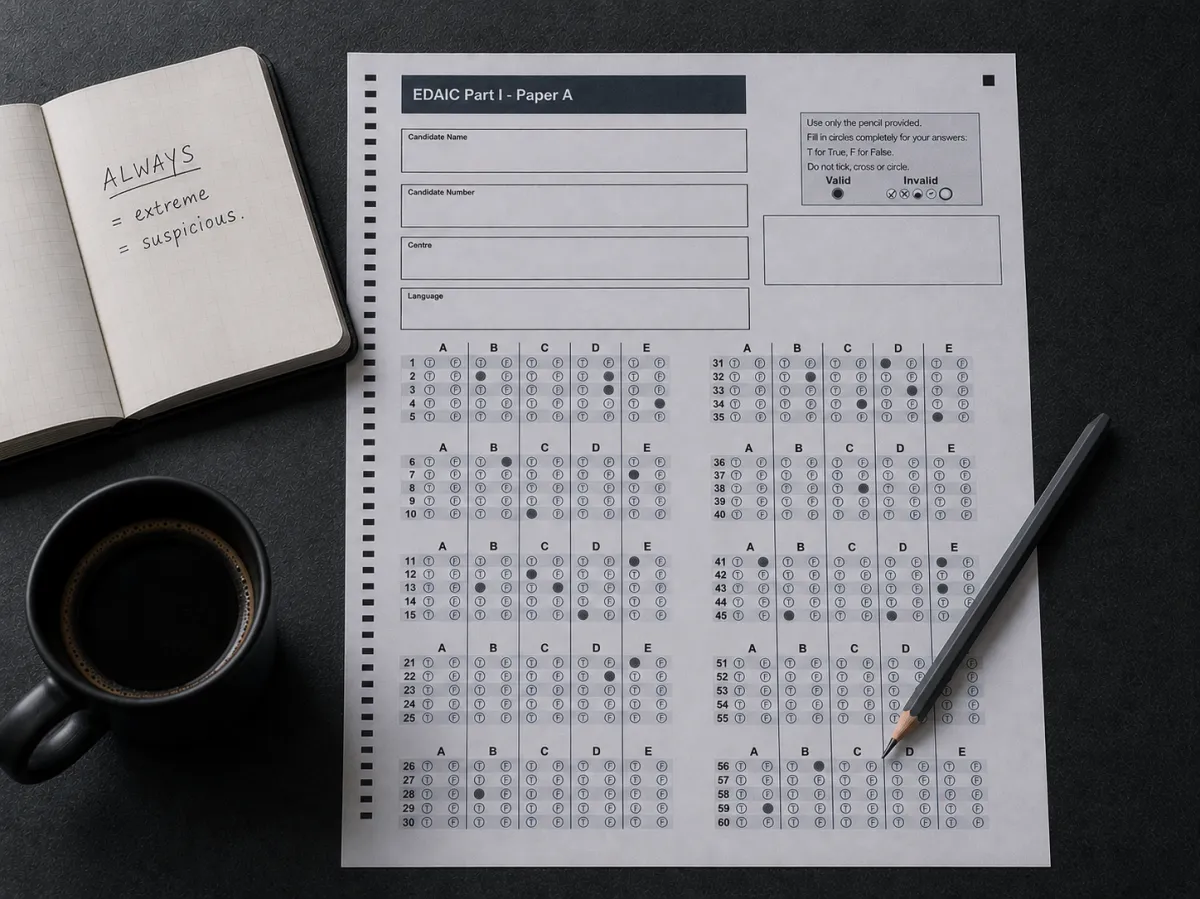
This takes three times as long per topic. You will cover fewer topics per hour. You will retain the ones you cover far more reliably — which is exactly what you need for 600 binary judgements across two separate papers — 90 minutes each online, or 120 minutes at paper-based centres.
Apply this to every subtopic across the five EDAIC Part I domains. For the full list of what is in each domain, see our EDAIC Part I Syllabus post.
If you want the domain content already broken down and structured for retrieval practice rather than passive reading, ThioSuxa EDAIC is built exactly for this.
Spaced Repetition: The One System Worth Adding
Spaced repetition is a scheduling method: you review material just before you are about to forget it. Every time you correctly recall something, the interval before the next review lengthens. Every time you fail, it resets shorter. The result is that you spend revision time on what you actually need to review, not what you already know.
You do not need an app for this. A traffic-light method works:
- Green: I know this confidently — review in 7 days
- Amber: I know this shakily — review in 2 days
- Red: I did not know this — review tomorrow
Apply it to your self-generated statements or your question bank errors. It solves the most common revision mistake: spending time on topics you already know — because they feel good to revise — while the gaps you never closed remain untouched until exam day.
When to Use Question Banks
Question banks are not a replacement for active recall sessions. They serve a different function: they test under timed conditions, with the pressure of the actual exam format, across domains you have already revised.
Use them when:
- You have completed a domain’s active recall phase
- You want to test knowledge under timed conditions (18 seconds per statement — see our MTF technique post for why this matters)
- You want to identify which specific statements within a domain are still wrong
Do not open a question bank in week one of preparation without domain knowledge behind you. A candidate who does will score around 45–50% — near random — and walk away with no useful information about what they know or do not know. The score is meaningless without the knowledge to interpret it.
How to Know When You Know Enough
Every candidate asks this. Nobody answers it directly. Here it is:
If you can generate five accurate true/false statements about any subtopic in the syllabus from memory, you know it well enough to pass questions on it. If you cannot, you do not.
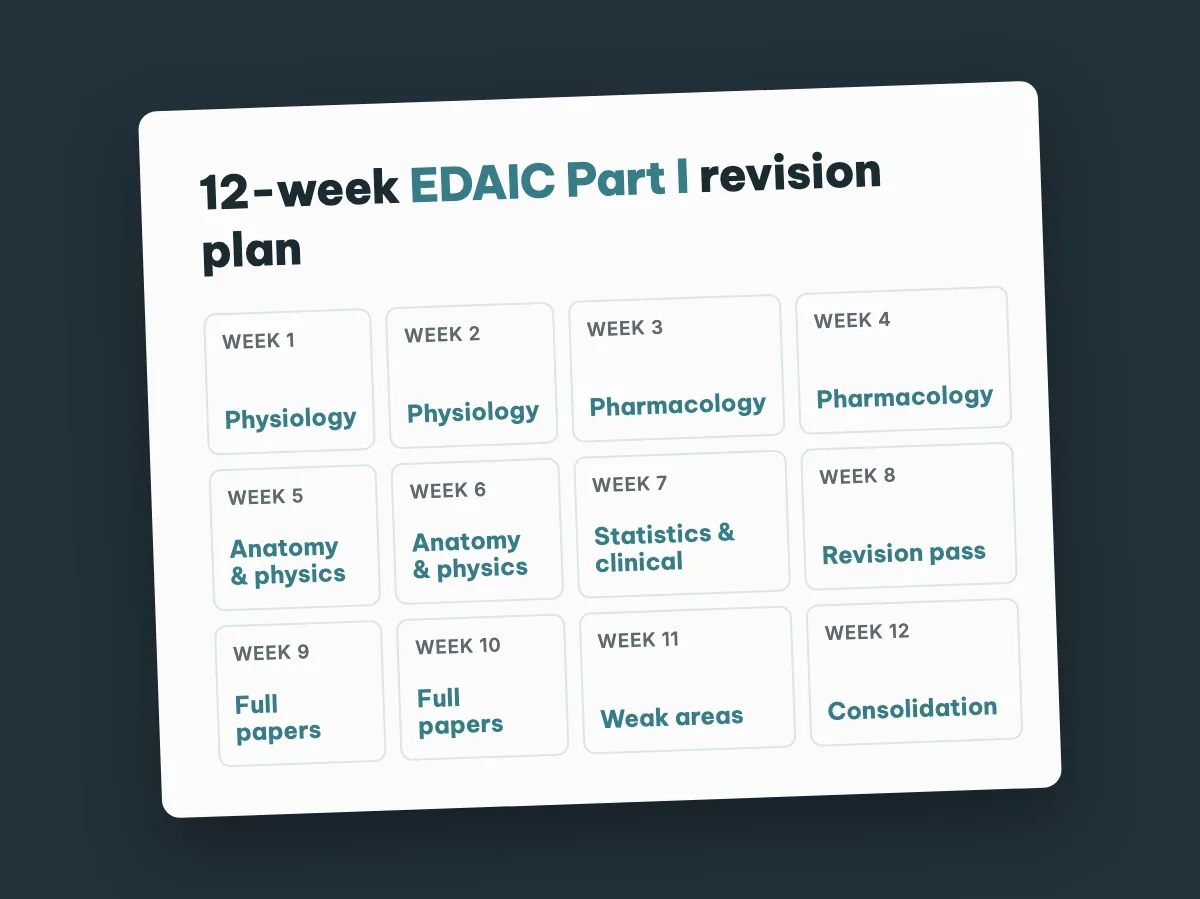
Run through your syllabus map at the end of week 10 of your preparation (see our 12-week study plan). Every subtopic where you cannot do this is a gap. Gaps at that stage are fixable. Gaps you discover on exam day are not.
The Note-Keeping Trap
Many candidates spend the first month of EDAIC preparation building elaborate notes — colour-coded, formatted, indexed by domain. The notes become the product. This is perhaps the single most effective way to fail an exam while feeling very productive.
Notes are only useful if you later use them to test yourself. A notebook that is written but never used for retrieval practice is decoration.
Write less. Retrieve more.
That principle, applied consistently across 12 weeks of preparation, is what separates candidates who pass from candidates who read everything and still fail.